AI is Eating Our Lunch, One ‘That’ll Do’ Project at a Time. Unfortunately, That’s How Most of Us Creative Folk Make a Living. 🫠
I don’t think AI is about to become the next Vivienne Westwood, Kendrick Lamar, or Christopher Nolan. It doesn’t need to. Most creative work isn’t trying to redefine a genre or end up in a museum one day. It just needs to be good enough to do its job.
And AI is getting very good at good enough, which may be far more disruptive to the creative economy.
Most designers aren’t crafting iconic brand identities every day. Most journalists aren’t shifting the national conversation on the reg. Most showrunners aren’t making the next Succession – they’re getting the next guilty-pleasure reality show out the door.
That isn’t a criticism. The industry runs on skilled people making intelligent decisions within imperfect budgets, brutal timelines, and conflicting feedback. So when I say passable, I mean work whose purpose is to function rather than enter the zeitgeist.
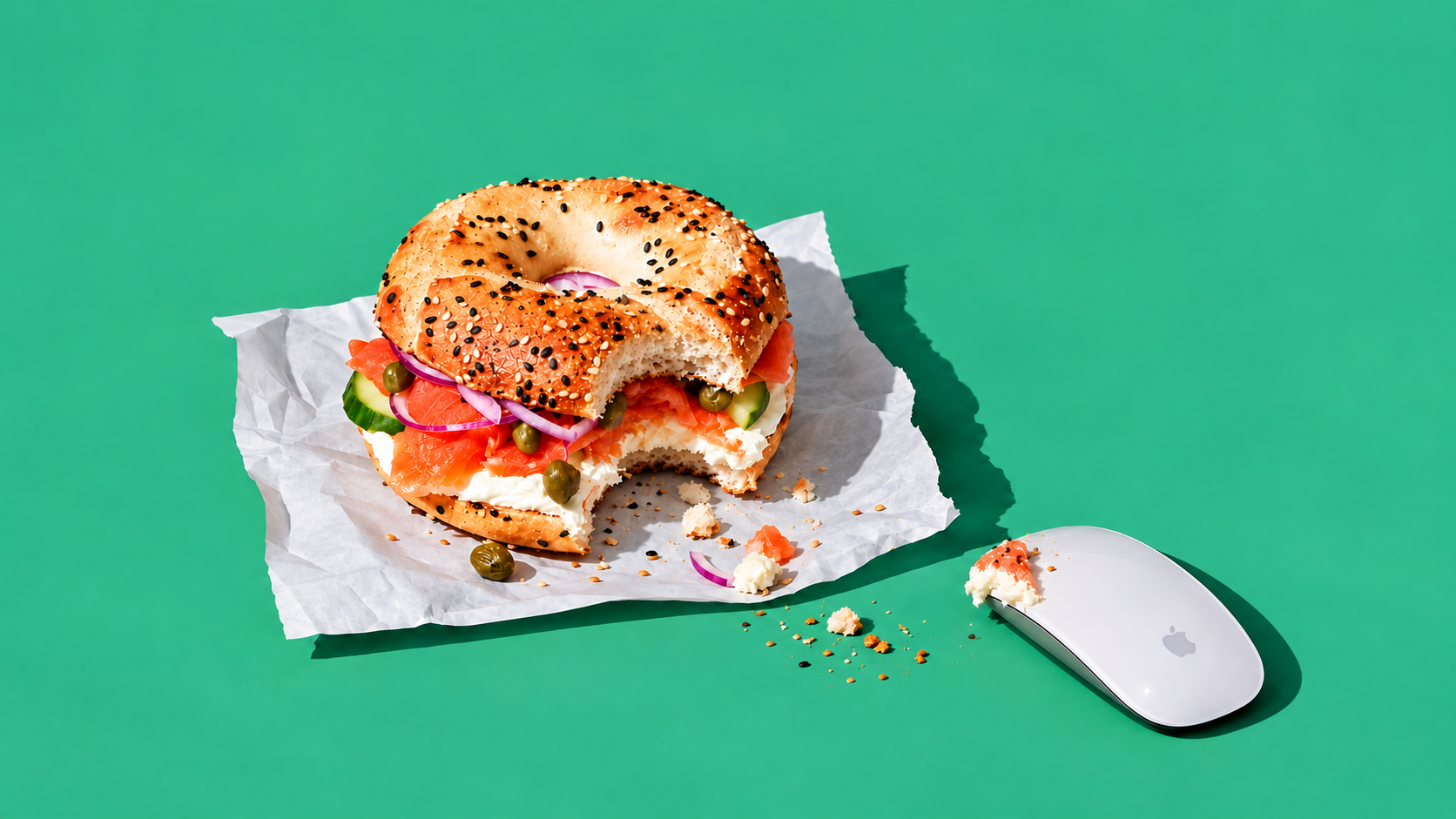
That vast, necessary middle is AI’s natural habitat. It’s already eating our lunch, one routine visual effect, voiceover, and think-piece at a time. AI doesn’t have to do that work better. It just needs to make commissioning a human feel like the more complicated option. Suddenly, somebody somewhere is saying, “Yeah, that’ll do. Send it. I’ve got padel in 30 minutes.”
There’s an obvious upside to the tech. The local café owner who needs an A-board promoting their miso-glazed aubergine, whipped feta, and hot honey toastie can now make something plausibly professional without briefing a designer. Great. Professional creatives weren’t exactly retiring early off that sort of stuff anyway. The problem is when that convenience moves up the food chain, into skilled work that currently pays people’s bills.
I use AI regularly, so this isn’t a sermon about switching it off. It helps me test ideas, organise messy thinking, and build tools that save me from tedious admin. All genuinely useful. But as AI becomes an increasingly convenient alternative to commissioning creative work, convincing people that our involvement is worth it becomes a much trickier proposition.
If making things gets easier, getting anyone to give a shit about what we make gets harder. And once leadership and finance start handing all the “that’ll do” work over to AI en masse, what exactly are we going to be paid for?
The Great Creative Shortcut
Creative careers have historically been protected by friction. If you wanted a quality photograph, song, or illustration, you needed somebody who knew what they were doing. The gap between amateur and professional was obvious, and people paid for the skill required to cross it.
That gap has been shrinking for decades. Digital cameras made photography more accessible. GarageBand did it for music. Canva did it for design. But AI goes further. It doesn't just make the tools easier to use. It does much of the making for you.
Cory Doctorow has a useful metaphor for where this can lead: the centaur versus the reverse centaur. In the good version, the human is the head and the machine is the body. Technology provides the horsepower, but we decide where we're going. In the reverse-centaur version, the machine sets the pace while the human becomes the fleshy bit attached to it – correcting mistakes and taking responsibility when things go wrong.
Applied to creativity, the good version frees designers like me from drudgery to spend more time thinking and experimenting. The bad version has us generating 300 options by lunchtime, sifting through the sludge, repairing the errors an intern wouldn't make, and signing our names to whatever survives. The machine sets the pace. We get the thankless sign-offs and say cheers for another day in gainful employment.
That worries me more than some robot creative director hoovering up awards at Cannes. We may not be replaced by machines with better ideas. We may become exhausted assistants to machines endlessly regurgitating the great ideas of the past.
Human Touch, Sold Separately
Human beings have a strange habit of falling in love with friction shortly after technology removes it. Streaming gives us almost every song ever recorded, yet people still spend £30 on one album pressed onto a large black disc they have to stand up halfway through and turn over.
We can watch almost any film from bed on a phone while checking WhatsApp and ordering dishwasher tablets. Or we can go to an IMAX, sit in the dark with a room full of strangers, and have Hans Zimmer rearrange our internal organs. Technically, both involve watching a film. Experientially, they’re not even close.
I think that difference becomes more valuable. Records, books, magazines, and prints give creativity physical weight. Live music, theatre, comedy, and talks turn something endlessly reproducible into an experience that happened once, in a room, with you there to soak it all up.
The same instinct is appearing in my corner of advertising and design. Apple, for example, seems determined to promote its products the unnecessarily difficult way. Its Apple TV ident, which could have been knocked out in Cinema 4D, instead uses real glass, studio lights, and cameras. There’s something wonderfully contradictory about a company selling us a frictionless future choosing to communicate it covered in fingerprints.
At D&AD Festival, Squarespace’s David Lee argued that taste will become the currency of the future and human craft a new form of luxury. I think he’s probably right. When anyone can generate something polished in seconds, polish itself stops being particularly impressive.
That doesn’t mean everything needs to be handmade. A hand-cut collage can still be shit. A motion graphics piece can contain enormous care, judgement, and skill. The distinction is whether technology is helping somebody explore and shape an idea, or replacing that process with AI’s attempt at the most statistically likely answer.
Maybe the premium isn’t human-made so much as human-led.
Show Me the Receipts
Behind-the-scenes films used to be bonus material – the stuff you watched if you had a suspicious amount of free time and really wanted to hear an actor explain how they got into the mind of a flesh-eating zombie. In an AI-saturated world, they start serving a more useful purpose: showing us who made the thing and how. Less DVD extra, more creative chain of custody.
Show me the sketches. Show me the set. Show me the rejected directions. Tell me which experiences shaped the idea. Tell me what went wrong, what changed, and why the finished thing looks the way it does. Essentially, show me the receipts.
The making-of films flooding my feed don’t merely demonstrate the effort involved. They make the process part of the entertainment, and increasingly, part of the sell. Sometimes the fact that people bothered becomes more compelling than the end result.
I think that appetite will spread beyond visual craft. Named opinions pieces and recognisable human voices will also become more valuable. Sure, AI can summarise an issue, explain both sides, and generate provocative takes before I’ve finished brushing my teeth. What it can’t genuinely offer is the accumulated experience behind a particular person’s point of view. Humans crave human responses.
That’s part of why people sit through two-hour podcasts, buy tickets to live events, and subscribe to individual writers rather than relying entirely on faceless technology. You aren’t simply receiving information. You’re borrowing somebody else’s take on it – their history, taste, prejudices, and sense of humour.
Which brings me to the awkward bit. What might happen to me? How much of what I’m paid to do sits in that vulnerable middle? Will people continue to pay for the creative thinking I believe I bring, especially when I’ll be up against countless other talented people who quite reasonably fancy a slice too?
Escape the Middle and Get Weird
I’ve spent over 15 years working as a designer and creative, improving at things technology is now making easier. Illustration. Motion graphics. Hell, even PowerPoint presentations. Turning a blank page into something someone will pay good money for.
I’d be lying if I said the speed of change doesn’t scare me. Some creative jobs will no doubt disappear. Once-valuable skills could lose value. Work occupying entire teams may be completed by far fewer people. So what makes us harder to average out?
I’m not the world’s greatest designer, but I believe I add value. I can take a messy brief and find the insight that's worth bringing to life. Beyond pushing pixels, I can develop concepts, write, and present. I’m not interested in staying in my lane or appearing when it’s “design’s turn”. You’ll see and hear from me from brief to delivery. That might rub a few purists up the wrong way, but surely it’s worth keeping me around.
Being a useful thread throughout a project is probably my edge. Not one protected technical skill, but the ability to think, make, explain, and help get something over the line. For years, being broad could feel like an admission you hadn’t specialised properly. These days, breadth might be exactly what creatives need to compete against machines.
The creative professional of the near future may spend less time proving they can operate the tools and more time demonstrating that they know where a project needs to go, or at least how to get it there.
But creativity can’t just become another exercise in making ourselves more employable.
I saw The Strokes recently, and Julian Casablancas said something that stuck with me: “Reality should be fun.” I love that sentiment. Our creative work should reflect our human experiences, and we should enjoy the messy, unpredictable process of making it. That's half the fun, after all.
Perhaps the best response to a flood of automated sameness is to get a little weird. Experiment. Break things. Follow ideas that don’t immediately make sense. Surprise people, including ourselves.
It’s quite possible that remaining a creative professional will become harder before we know it. There’ll be more competition for attention and fewer places to hide behind technical skills alone. I’m only slightly shitting myself, but I’m up for the challenge.
If AI is about to automate the ordinary, I’m more determined than ever to push boundaries and recklessly swerve in and out of my lane. I might crash and burn, but at least I’ll have enjoyed the ride.