
Infinite Choice, Zero Overlap: The Cultural Loneliness of Modern Entertainment 🏝️
When everything is always available, nothing seems to stick.
We have more entertainment than any generation in history, yet almost none of it becomes a shared memory. Films evaporate. Shows blur together. Music arrives, plays for a bit, and disappears into the algorithmic mist. We're entertained constantly yet culturally undernourished.
I grew up in the era of the scheduled life. Entertainment arrived on timetables. You waited for it. Planned around it. My youth and early adulthood were shaped by limited choice and the mild inconvenience of having to be somewhere at a certain time to experience something.
We didn't consume content. We went to the cinema. We passed around CDs and paperbacks. We crowded around a single TV, controllers in hand, playing Mario Kart – or took turns watching someone else cause havoc in GTAs Los Santos.
Back then, mainstream media was actually a powerful thing. It was our cultural centre of gravity. Whether you liked a show or album was beside the point – you knew it existed. You had to. Choice was limited, and what you watched, read, or listened to was largely curated for you by release schedules, networks, and publishers.
Today, that centre has collapsed.
We've traded cultural monuments for a digital blur. Entertainment now arrives frictionlessly, personalised, and leaves without a trace. We've gained infinite access, but lost the ability for anything to linger long enough to argue about it, quote it, or reference it three years later.
Entertainment culture hasn't disappeared. It's been downgraded to a utility. Like water. Or electricity. Always on. Rarely remembered.
The Convenience Problem
Imagine if the head chef from your favourite restaurant became your live-in cook.
At first, it would be a dream. Restaurant-quality cacio e pepe on demand. But pretty quickly, the magic would fade. There's no anticipation. No atmosphere. No sense of occasion.
That's what digitisation has done to how we experience culture and entertainment. On the surface, it's a triumph of access. In reality, by removing the grind of discovery, we've stripped away the value. When everything is instant, nothing feels earned. And when nothing is earned, nothing sticks.
The friction of my twenties – like waiting with housemates for the next episode of Game of Thrones – wasn't a flaw. It was the feature. The waiting gave the episode weight. Time to speculate. Time to overanalyse.
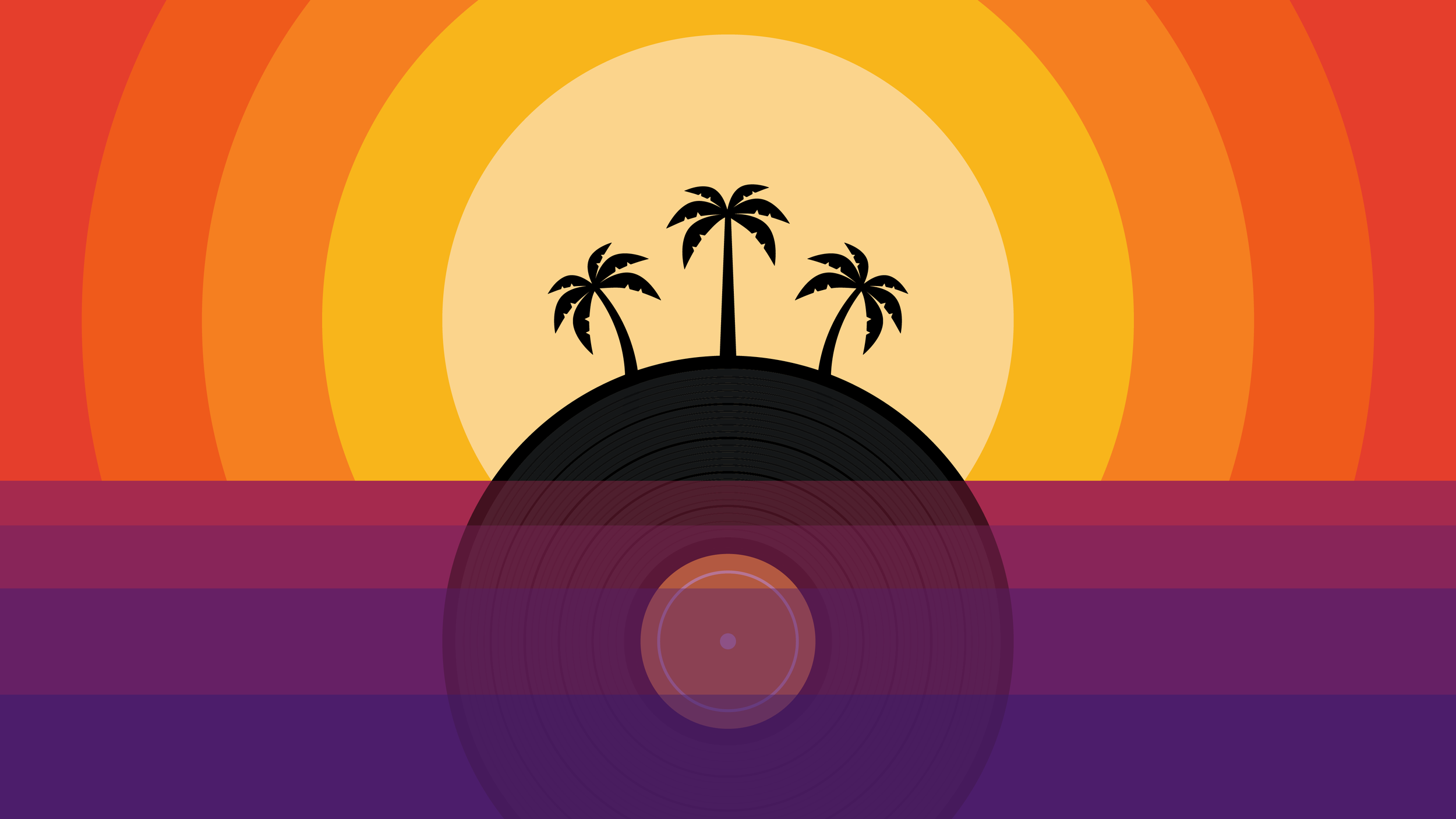
It's partly why I keep a record player in the middle of my apartment. Not just for aesthetics but for ritual. You have to stand up. Choose a record. Commit to a mood. You can't shuffle. You can't skip. You listen to an album from front to back, as someone actually intended.
That inconvenience forces intention and makes you pay attention.
The Personalisation Problem
Everyone now lives inside a perfectly curated bubble.
Your Netflix homepage is unrecognisable to mine. Your Spotify Wrapped doesn’t match a single person you know. Algorithms optimise relentlessly for the individual but completely ignore “the us”. There’s rarely any overlap anymore and that’s a real shame.
I felt this recently at work. I told a fellow 27-year-old designer I was going for a "Brady Bunch" aesthetic – nine squares, people doing different things in each. They stared blankly. After a beat, I asked, "You do know what The Brady Bunch is… right?"
They did not.
For decades, limited channels and endless reruns meant cultural absorption was unavoidable. You didn't choose to know these references – you just picked them up through osmosis.
Now, we're millions of people consuming bespoke entertainment in isolation. We're saturated with content, but fragmented in consumption.
And the uncomfortable bit is that we’ve chosen this. We selected "not interested" on recommendations. We trained the algorithm to show us exactly what we wanted and nothing else. We customised ourselves into cultural silos and then act surprised when we have nothing in common at dinner parties.
The Abundance Problem
There is simply too much of everything, all the time.
Netflix drops entire seasons in one go. Spotify adds thousands of tracks daily. Marvel and Star Wars refuse to pause long enough for anyone to miss them. New releases arrive before the last ones have had time to settle in your memory.
When abundance removes restraint, anticipation disappears. And when anticipation disappears, so does memory. You're not building toward anything. You're just consuming whatever auto-plays next.
We don't gather around prestige dramas or number one albums anymore. We gather around whatever briefly breaks through the noise – usually TikTok trends or trashy reality shows that become ironically watchable for a weekend, then vanish without so much as an aftertaste.
But why do we accept this trade-off? What are we gaining that makes cultural fragmentation worth it?
The answer, I think, is control. Or at least the illusion of it. We've traded shared culture for the promise that we'll never have to consume something we don't like. We've sacrificed collective memory for the guarantee that our evening won't be "wasted" on someone else's choice.
Is that a fair trade? I genuinely don't know.
The Social Tax of Real Experiences
There's a widening gap between digital entertainment and physical, shared experiences.
We say we value the latter. We book overseas trips. Sign up for yoga classes. But in practice, real-world experiences are increasingly viewed as high-friction – and therefore optional.
Leaving the house to watch a live show has become a social tax most of us aren't willing to pay.
A few years ago, I started a film club at work. Free tickets. Big screen. Solid film choices (objectively). I was surprised by how much convincing it took to get people to come along.
In an era of high living costs, hybrid work, and instant gratification, the effort of a shared experience couldn't compete with the couch and a smartphone within arm's reach.
With all that said, I get it. After a hard day, the hassle of putting on outside clothes and commuting to see a film you could watch at home a month later in your trackies is a lot to ask.
The logic is sound. But I still don’t like how the numbers add up.
The Dilemma We Won't Solve
Streaming has democratised creativity. More voices are heard now than ever before. More stories. More perspectives. The traditional gatekeepers are long gone. That part is genuinely great.
But access without shared attention fragments cultural staying power and meaning. And we can't have it both ways.
We can't have infinite personalisation and cultural cohesion. We can't have algorithmic efficiency and serendipitous discovery. We can't optimise for individual preference and maintain collective experience.
The old model – limited channels, scheduled programming, cultural gatekeepers – had massive problems. It excluded voices. It concentrated power. It forced everyone into the same narrow pipe whether it suited them or not. We were right to blow it up.
But we haven't built anything to replace the shared scaffolding it provided. We've just scattered into millions of individual content streams, assuming connection would somehow persist on its own.
So where does that leave us? Sitting with the tension, mostly.
Buy the physical book if you want. Dust off your parents record player. Be the annoying friend who insists on the cinema trip. But know that you're swimming against the tide. Know that your individual choices, however intentional, won't reconstruct what we've collectively dismantled.
The cultural moments that once defined our lives aren't gone. We just stopped making enough space for them. Or perhaps more accurately: we stopped forcing everyone into the same space, and we haven't figured out how to recreate that overlap voluntarily.
Friction is the grout that allows memory to form. But friction is also what we've spent decades engineering out of existence, because it was inconvenient, limiting, and often unfair. If we keep optimising for ease, we shouldn't be surprised when our memories feel just as disposable. But if we reverse course completely, we'll just rebuild the old gatekeeping systems under a new name.
There's no clean way out of this. Just a choice about which set of trade-offs we're willing to live with.
Anyway, does anyone want to watch a classic rerun at the cinema with me this weekend?
Though if I get no takers, I guess I could just stay home and stream it from my couch. Pretty sure I've got popcorn in the cupboard somewhere. Plus, then I don't need to put on proper trousers. Or sit on a sticking hot tube into town.
Fuck it. I'm staying home.