
You Don’t Need Another Income Stream. You Need to Start Investing. 💷 💷 💷

The average side hustle fails within the first few years. Meanwhile, consistent investing silently compounds wealth over decades. One relies on effort. The other relies on time. Only one aligns with ordinary human behaviour.
In recent years – and especially in the wake of rapid advances in AI – a particular idea has taken hold in popular culture: that the future belongs to those who are endlessly adaptable, relentlessly entrepreneurial, and constantly building income streams outside of traditional employment. The usual suggestions range from launching online shops and courses to freelancing and, yes, even creating podcasts or newsletters like this one. And if you can run it all using AI, even better.
This way of thinking is seductive, offering the promise of independence and resilience in an unstable labour market. Yet for most people, the expectation that they should become business owners is unrealistic and ultimately distracting. I’m suggesting a far more reliable path to long-term financial security is smarter: invest consistently and allow compounding to do its work.
Investing, not business-building, is a better use of energy for growing wealth. It doesn’t require you to reinvent yourself, build a personal brand, or compete in saturated markets. It doesn’t demand constant attention or emotional labour. It simply requires participation and a little patience. Look up ‘Dollar Cost Averaging’ (DCA) to get the ball rolling.
This distinction matters. Side hustles tie your financial security directly to your continued effort. Investing decouples wealth from labour. In a world where AI may genuinely reshape employment, that difference becomes critical.
We Can't All Be Entrepreneurs
If books, podcasts, and YouTube are anything to go by, modern discourse treats entrepreneurship as a universal aspiration. If jobs are disappearing, then people must create their own. Learn to leverage AI. Build a product. Launch a service. Repeat. Ideally while documenting the process online to grow and monetise an audience.
Successful founders are rampant on new media breaking down the secret to their success. What is rarely emphasised when evaluating these conversations is that these people are outliers. Their stories are compelling precisely because they are uncommon. Founder culture has the aesthetic of success and the survival rate of a reality TV marriage.
Most people do not have the temperament or desire to run a business. They function best within larger organisations – contributing specialised skills, collaborating with others, and operating within defined structures. They value stability and certainty. They don’t want to worry about payroll, cash flow, or customer acquisition. With whatever energy remains after a hard day, they’d prefer to eat nachos in a stained shirt and rewatch Friends. But that might just be me.
People want to do meaningful work without also carrying the psychological and financial burden of ownership. Telling everyone they must become self-employed in order to survive is not empowerment. It’s a refusal to acknowledge reality.
You Can't Replace Everyone with AI and Still Have Customers
There is no doubt that artificial intelligence will reshape the labour market. Certain roles will disappear. Others will change beyond recognition.
However, the increasingly popular claim that AI will replace “most jobs” skips over an important question: what happens next? Apart from, of course, a tidal wave of LinkedIn prophets predicting the end of civilisation.
In a future where AI-driven efficiency concentrates wealth and power into a handful of people at the top, the economic logic begins to break down. Businesses require customers. Markets require purchasing power. If AI truly replaces everyone, we’ll finally achieve peak capitalism: companies so optimised the only customers left are other AIs.
If large portions of society are pushed out of meaningful employment without alternative income structures, the system undermines itself. This is why discussions around systemic interventions like universal basic income should be treated as practical responses to automation at scale.
More importantly, while AI excels at optimisation, it still struggles with originality. Human creativity, judgement, and emotional intelligence remain central to how value is created. Work will change, but people will remain integral. Sorry, profit-hungry CEOs.
Investing is the Greatest Wealth Hack
Alternate revenue streams are often presented as financial insurance. If one income stream fails, another will support you. In theory, this sounds sensible – and when executed well, it can be true. In practice, it ignores how demanding businesses are.
Most businesses, and even more side hustles, fail. Many never become profitable. Almost all require sustained time and energy – resources already scarce for people balancing full-time work, family, and the general business of staying sane. And nothing drains the joy from a personal pleasure faster than the phrase: “You should turn this into a business.”
By contrast, investing scales confidently in the background. If you set it up right, It doesn’t ask for constant decision-making, self-promotion, or reinvention. It doesn’t compete for attention in crowded online marketplaces. Once set to autopilot, it asks very little beyond consistency.
I’ve been investing what I can afford to lose for a few years now, and the most striking thing has not been how quickly the money has grown, but how little involvement it has required. Compared to the default savings approach many people take – hoarding cash or lumping what they can into high-interest savings accounts – the difference is hard to ignore.
Yes, those tools have their place. They’re excellent for short and medium-term goals: a house deposit, a wedding, or if you’re close to your dream retirement somewhere warm near the ocean. But for long-term wealth, they pale in comparison to stocks and shares investing.
Cash Doesn't Fluctuate. It Just Buys Less Year After Year.
Many people are understandably risk-averse. Watching money fluctuate feels uncomfortable. Cash feels reassuring. It doesn’t go down. Until you zoom out.
Unfortunately, inflation erodes purchasing power.
Historically, broad stock markets have significantly outperformed cash over long periods. The S&P 500 in the US has delivered average annual returns of around 10% over several decades, vastly outpacing cash once compounding is taken into account. UK markets, and even my beloved ASX in Australia, tell a similar story. Savings accounts typically struggle to do much more than tread water after inflation.
To make the power of compounding concrete, imagine two British lads just trying to act smart with their pennies.
Harry saves £300 a month into a savings account earning 3% annually. Barry invests the same £300 a month into a tax-free stocks and shares account tracking a broad market index returning 7-10% annually. After 30 years, Harry has roughly £174,000. Barry has closer to £351,000 – £619,000.
Same inputs. Vastly different outcomes. While Harry sleeps peacefully knowing his balance never fluctuates, Barry sleeps peacefully knowing inflation is quietly mugging Harry.
Your Parents Needed a Stockbroker. You Just Need an App.
Many people remain cautious because, for previous generations, investing really was more complex. High fees, minimum balances, paperwork, and limited access made property and pensions the obvious places to put hard-earned cash. Those are still excellent components of a financial plan.
But they are no longer the only ones. Or the most powerful.
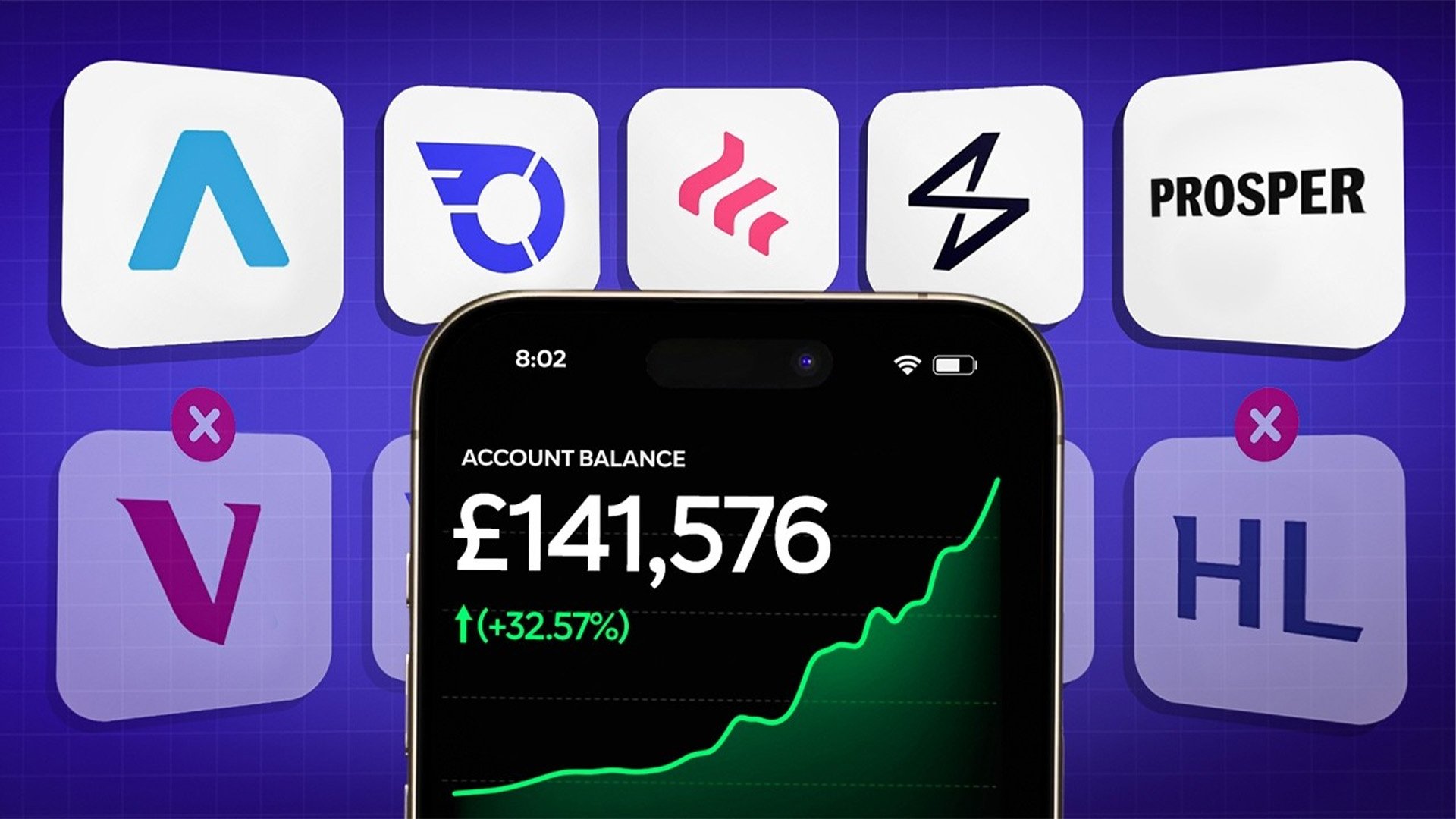
Today, investing can be done through simple apps with minimal fees. You can start with as little as £1. You can automate contributions, invest globally, and ignore day-to-day market noise entirely. With a modest amount of education, the process becomes far less intimidating than it’s often made out to be.
For most people, the real risk is not investing badly. It’s not investing at all.
The true educational failure isn’t that people don’t know how to code or prompt AI. It’s that they’re not taught how money works.
Many adults discover the power of compounding the way they discover yoga – later than ideal and mildly resentful they didn’t start earlier.
Many people genuinely struggle financially, and no amount of budgeting will solve systemic inequality. But many others underestimate how much flexibility to save they actually have. Subscriptions, impulse purchases, and habitual spending dissolve the ability to invest.
This isn’t an argument for removing small pleasures from life. It’s an argument for intentionality. Investing even modest amounts consistently allows people to build security without sacrificing wellbeing. Understanding that £1 today could become £10, £50, or £100 tomorrow should be hammered into everyone from school through adulthood.
Wealth Building Without the Hustle Hassle
The dominant narrative suggests that survival in an AI-driven future requires relentless effort, constant upskilling, and entrepreneurial ambition. For a small subset of people, this will be true. For most, it will not.
The more realistic and effective solution is simpler: learn how to manage money, invest consistently, and allow time to do the hard work of growth.
Yes, it’s scary to see markets go up and down. But if you’re lucky enough to have 10-30 years in the workforce left in you, history indicates the graph always finds its way back up and to the right. So all you need to do is stay the course.
In a culture obsessed with productivity and optimisation, investing is almost a radical idea. It doesn’t ask you to become someone else. It doesn’t require you to monetise every spare moment. It rewards patience rather than intensity.
For most people, the best path forward isn’t to do more – but to set things up so they can ultimately do less.
All this talk of compounding has got me thinking. Perhaps I should cash in my portfolio and upgrade my flight to Sydney to first class.